
![[Attorney in front of Seoul Family Court] How many years have you lived together? Is this a common-law marriage?](/blog/uploads/2026-09/20260929_173127_17be11.png)
“We have lived together for 3 years. Can we become a common-law marriage?” , “Aren’t we legally married after 5 years?”
To conclude, there is no standard in the law for how many years you have to live together to become a common-law marriage.
The court looks not only at the period of time, but also at whether the two people had the intention to live as a couple and whether they actually lived a life worthy of being considered a couple.


| In legal marriage, a couple is determined through marriage registration |
Our civil law adopts the legal marriage principle, which recognizes the marital relationship through an explicit method of marriage registration.
Common-law marriage refers to a relationship in which a person has the intention to marry but lives together as a married couple without registering the marriage.
Since the fact that they are a couple cannot be confirmed through a marriage registration, common-law marriage has no choice but to be judged based on the substance of "whether they lived like a married couple."
Therefore, the period of cohabitation is only considered as one of several circumstances and is not recognized as such.
| Two things the court will check |
A common-law marriage must be a case where there is a subjective intention to marry between the parties, and objectively, there is a substance to the marital life that allows the couple's joint life to be recognized in terms of family order in terms of social concepts.
- Intention to Marriage
Both people must view each other as a couple and be willing to live as a couple. If only one side thinks that way, it is not enough, and the doctors must agree with each other.
- The reality of married life
Even from the outside, there must actually be a joint life where you can be seen as a couple beyond lovers or cohabitants.
Both requirements must be met.Even if two people lived together for a long time, if they had no intention of living as a couple, it is not a common-law marriage. Even if they had intentions of getting married, if they did not actually live as a married couple, it is difficult to consider it as a common-law marriage.
| If you lived together but considered not to be in a common-law marriage |
- A matter of living together for several months while preparing for marriage
The two lived together for several months with the assumption of marriage, but when the marriage fell through, they immediately ended their cohabitation. One party did not change the address on their resident registration even while living together. The court considered that the cohabitation was temporary to prepare for marriage and did not last long, and also looked at the two people's ages, family relationships, and the duration and content of their relationship.
→ It did not recognize the common-law marriage, saying it was difficult to recognize the agreement of marital intentions or the reality of the couple's joint life, and did not accept the claim for damages on the grounds of unfair dissolution of the common-law marriage.
- Wedding and honeymoon completed
The couple got married and went on a honeymoon, but the relationship broke down due to one party's fault at a stage before they started living together.
→ The court considered that this stage was not much different from a relationship that had reached common-law marriage. Therefore, we decided that, just as in the case of an unfair annulment of a common-law marriage, compensation for mental damages can be sought from the responsible party.
- When one party has a legal spouse_Bigamous common-law marriage
According to the law, even if a couple is living separately and one of them is living as a married couple with the intention of marrying a third party, unless there are special circumstances, this cannot be recognized as a common-law marriage and afforded the same protection as a legal marriage.
→ This is the so-called bigamous common-law marriage. If your legal marriage has not been resolved, in principle, it is difficult to receive common-law marriage protection even if you have lived together for a long time.
| What changes if a common-law marriage is recognized? |
The reason for considering common-law marriage is that the rights recognized are greatly different.
- Obligations and rights as a married couple — Cohabitation like a legally married couple · Support · Cooperation · Obligation of chastity (Article 826, Paragraph 1 of the Civil Act), and the right to representation in everyday household affairs is recognized (Article 827, Paragraph 1 of the Civil Act).
- Property division — If a relationship is terminated during one's lifetime, a claim for property division of property accumulated together is allowed even in a common-law marriage.
- Alimony — You can claim alimony from a spouse who unilaterally broke off a common-law marriage without justifiable grounds equivalent to the grounds for divorce under Article 840 of the Civil Code.You may also be able to file a claim against third parties who caused the breakdown, such as your spouse's parents.
- Other protections — If a common-law relationship is proven, you can inherit the status of a tenant under the Housing Lease Protection Act, and the right to receive a pension under the Industrial Accident Compensation Insurance Act · National Pension Act · Public Officials Pension Act can also be recognized.
Conversely, there are things you cannot receive even if you are recognized as a common-law marriage.
- Spouse in Article 1003, Paragraph 1 of the Civil Code refers to a legal spouse, so a common-law spouse has no inheritance rights. If a common-law marriage ends due to the death of the other party, claims for property division are not recognized.
| What do I need to prepare to have my common-law marriage recognized? |
A common-law marriage is not proven with a single document like a marriage registration. That's why objective data that shows the relationship between two people is important. Based on the circumstances considered by the court in the previous ruling, the following data may be helpful.
- Materials showing intention to become a couple — Wedding photos, wedding invitations, records of attendance as a couple at reunions and family events
- Materials showing the reality of communal living — Resident registration with the same address, account details for jointly managing living expenses, documents related to housing and property jointly contracted or prepared
- Data showing the perception of those around you — Data confirming that you were known as a couple by acquaintances or at work
The fact that they have been together for a long time makes sense when presented with data like this. If only the period is emphasized and there is no data showing the couple's life as a couple, it should be considered difficult to recognize a common-law marriage.
| In what cases does a common-law marriage dissolve? |
Since common-law marriages are not legally married, there is no need to go through legal procedures such as court confirmation of divorce or divorce reporting when breaking up.
It can be resolved either by agreement between two people or by unilateral notification from one party.
However, there is a deadline for claiming property division or alimony after dissolution, so it is recommended that you receive consultation so as not to miss the timing when resolving the relationship.
| If you are in a common-law relationship, prepare in advance |
A common-law spouse has no inheritance rights and cannot receive property division upon death. Therefore, if you want to leave assets to the other party, the only way is to prepare a legal mechanism during your lifetime.
- Bequest through notarization — This is a method of leaving a will to leave property to a common-law spouse through a notarial will (Article 1068 of the Civil Act). Since it is written by a notary, there is less risk of it being invalidated due to violation of formalities, and there is no need for probate procedures in the family court.
- Consider the reserved portion — If there are legal heirs such as children or parents, a claim for return of the reserved portion may be filed, so the reserved portion must be calculated together when determining the scope of the bequest.
- Storage of relationship proof materials — Wedding photos, joint living expenses account details, records of participation in family events, etc. become important materials when you need to prove common-law marriage later.
Common-law marriage receives similar protection as legal marriage as long as it is recognized, but recognition itself is often contested, and there is a large gap in protection in the event of death.If you are curious about what rights you have in your current relationship and what you should prepare in advance, please check in detail through consultation.
A union between a man and a woman who subjectively has the intention to marry and objectively has the substance of a joint life as a couple but has not registered the marriage is called a common-law marriage.

|
📌 Consult with Good Law Firm |
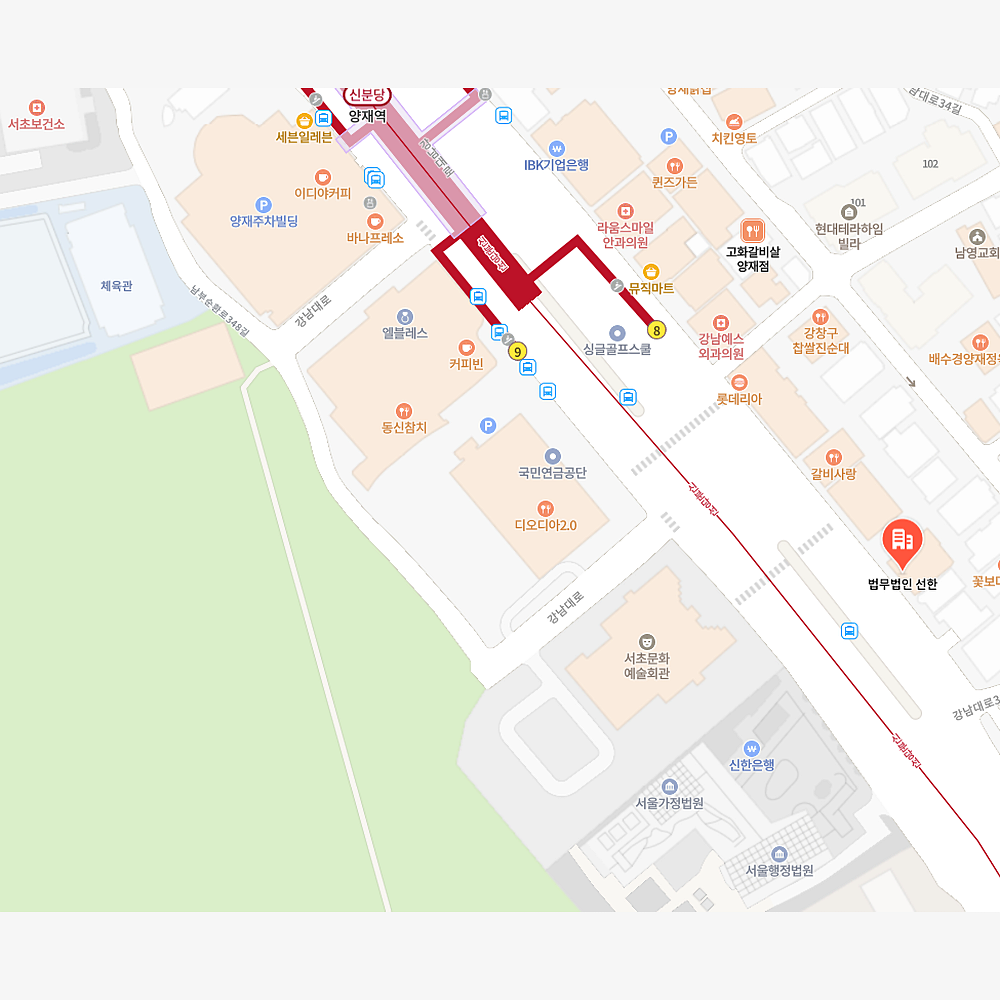
Opposite Seoul Family Court , Yangjae Station 8 Walk straight from exit 1 minutes 200, Gangnam-daero, Seocho-gu, Seoul 200, 1 floor · 3 floor ( Yangjae Station , Samhwa Building ) |
KakaoTalk open chat
https://open.kakao.com/o/sxYu1pVc
#Common-law marriage #What is common-law marriage #Requirements for establishment of common-law marriage #Common-law marriage property division #Common-law marriage alimony materials #Common-law marriage inheritance #Bigamous common-law marriage #Seoul family court lawyer #Yangjae station divorce lawyer #Good law firm #Go Mi-jin lawyer